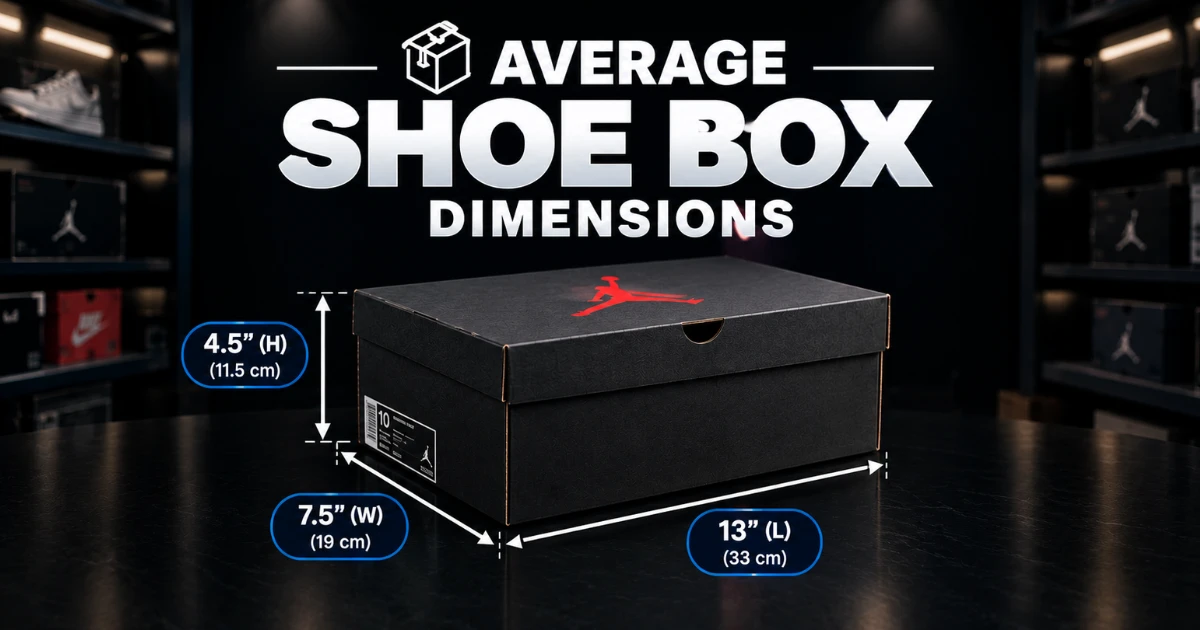
The average shoe box measures 13 x 7.5 x 4.5 inches (33 x 19 x 11.5 cm). That’s the number most people search for, and it holds true across most adult shoe boxes sold in the US. But that “average” hides a lot of variation.
This guide breaks down real average shoe box dimensions by category, shows you how to measure your own box correctly, and covers the shipping and storage angles most guides skip entirely.
What Is the Average Shoe Box Size?
The short answer: 13 x 7.5 x 4.5 inches, or 33 x 19 x 11.5 cm, in length, width, and height. That works out to roughly 440 cubic inches of interior space — about the size of a large shoebox you’d stack three or four high in a closet.
Why the Average Matters More Than You’d Think
Fit and protection — too loose, and shoes shift and scuff in transit
Shipping cost — carriers charge by box volume, not just weight
Storage space — closets, warehouses, and retail shelves are all planned around this rough size
Reuse — millions of people repurpose old shoe boxes for storage, crafts, or gifting, and knowing the standard size helps them plan what fits
Average Shoe Box Dimensions by Category
Men’s Average Shoe Box Dimensions
Age Group
Inches
CM
Infant/Toddler
6.5 x 4.5 x 3.5
16.5 x 11.5 x 9
Kids (4–7 yrs)
9 x 6 x 3
23 x 15.2 x 7.6
Youth (8–12 yrs)
10.5 x 7 x 4.25
27 x 18 x 11
Women’s Average Shoe Box Dimensions
Age Group
Inches
CM
Infant/Toddler
6.5 x 4.5 x 3.5
16.5 x 11.5 x 9
Kids (4–7 yrs)
9 x 6 x 3
23 x 15.2 x 7.6
Youth (8–12 yrs)
10.5 x 7 x 4.25
27 x 18 x 11
Kids’ and Wide-Width Shoe Box Dimensions
Children’s shoe boxes shrink fast as shoe sizes drop, ranging roughly from 8 x 5 x 3 inches for toddlers up to 10 x 6.5 x 3.5 inches for older kids.
One thing almost no packaging guide mentions: wide-width and extended-size boxes. A men’s wide-width dress shoe (2E or 4E) or a plus-size women’s shoe can need 0.5 to 1.5 inches more width than the standard chart above.
Average Shoe Box Dimensions by Size
Shoe Size
Men’s Box (inches)
Women’s Box (inches)
Size 6
12 x 8 x 4.5
11.5 x 7 x 4
Size 7
12.5 x 8 x 4.5
12 x 7.5 x 4
Size 8
13 x 8.5 x 4.5
12.5 x 7.5 x 4.5
Size 9
13.5 x 9 x 5
13 x 8 x 4.5
Size 10
14 x 9 x 5
13.5 x 8 x 5
Size 11
14.5 x 9.5 x 5.5
14 x 8.5 x 5
Size 12
15 x 10 x 5.5
14.5 x 9 x 5.5
Size 13
15.5 x 10.5 x 6
15 x 9.5 x 5.5
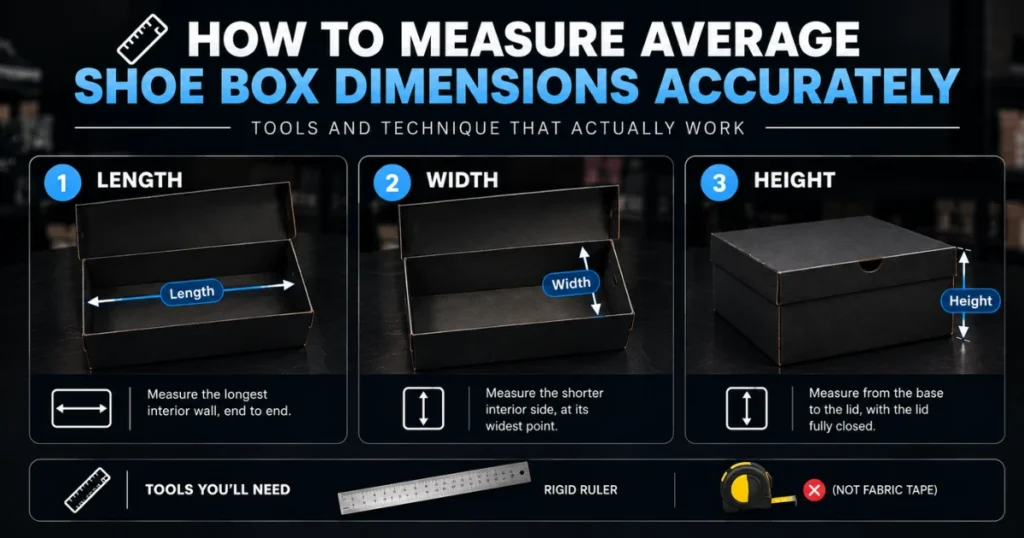
How to Measure Average Shoe Box Dimensions Accurately
how-to-measure-shoe-box-dimensions
Tools and Technique That Actually Work
Length: the longest interior wall, end to end
Width: the shorter interior side, at its widest point
Height: base to lid, with the lid fully closed
Measuring for Reselling, Storage, and Gifting
Most guides only talk to shoe brands. But a huge share of people searching average shoe box dimensions aren’t manufacturing anything — they’re reselling sneakers, organizing a closet, or repacking a gift.
Average Shoe Box Dimensions for Shipping, Storage & Cost Savings
Dimensional Weight and Why an Inch Matters
Carriers like UPS, FedEx, and USPS charge by dimensional weight (DIM), not just actual weight, once a package crosses a size threshold. The formula:
A box measuring 14 x 8 x 5 inches works out to 560 cubic inches, divided by 139, equals about 4 pounds of billable weight — even if the actual shoes inside weigh 2 pounds. That gap is pure margin lost to an oversized box.
The USPS Priority Mail Shoe Box is a free, pre-sized option built specifically for this: it measures 14-7/8 x 5-1/4 x 7-3/8 inches on the outside with an interior of 14-3/8 x 5-1/8 x 7-1/2 inches and roughly 575 cubic inches of volume.
The Shrinking Shoe Box Trend
Here’s something almost no other guide mentions: average shoe box dimensions have been getting smaller over the past decade. As DIM-weight pricing spread across carriers and sustainability targets pushed brands to cut cardboard use, footwear companies redesigned packaging to hug the shoe more tightly, with less “dead air” inside.
A box that used to run 15 x 10 x 6 inches for a men’s size 10 sneaker now often lands closer to 14 x 9 x 5. That single inch, multiplied across millions of shipped pairs, saves brands real money on both material and freight.
Marketplace and Platform Sizing Notes
If you’re selling on Amazon or a similar marketplace, dimensions determine your fulfillment tier and fees, not just the carrier’s DIM charge. Amazon FBA, for example, bins products into size tiers based on the longest side, the median side, and total weight — a shoe box that’s an inch too long can bump a product into a more expensive tier.
FAQs About Average Shoe Box Dimensions
What is the average shoe box size in inches and cm?
The average adult shoe box measures 13 x 7.5 x 4.5 inches, or 33 x 19 x 11.5 cm. Men’s boxes run slightly larger; women’s and kids’ boxes run smaller.
Are all shoe boxes the same size?
No. Size depends on the shoe’s gender category, shoe size, and type — boots and high-tops need noticeably taller boxes than flats or sneakers.
Does shoe box size affect shipping cost?
Yes. Carriers bill by dimensional weight, so a box even one inch larger than needed on each side can raise your shipping cost by 15–20%.
How much extra space should I leave inside a shoe box?
Add 0.5 to 1.5 inches of clearance around the shoe on each side. This allows room for tissue paper, air circulation, and easy removal without crushing the shoe.
What’s the average shoe box size for boots?
Boot boxes need extra height, typically 10 to 14 inches, to fit the shaft without folding or crushing it.
What material are most shoe boxes made from?
Corrugated cardboard is the industry standard for durability and moisture resistance. Chipboard is common for lightweight, budget packaging, and kraft board is popular for eco-focused brands.
How do I measure a shoe box the right way?
Use a rigid ruler, measure the interior wall to wall for length and width, and measure height from base to closed lid. Measure both shoes in a pair and use the larger one as your reference.
I’m Livia Fenwick, a writer and researcher focused on shoe box dimensions and packaging. I enjoy sharing clear, practical information about shoe box sizes, measurements, and storage. Through simple guides and useful tips, I help readers choose the right box for their shoes, shipping, storage, and everyday needs.